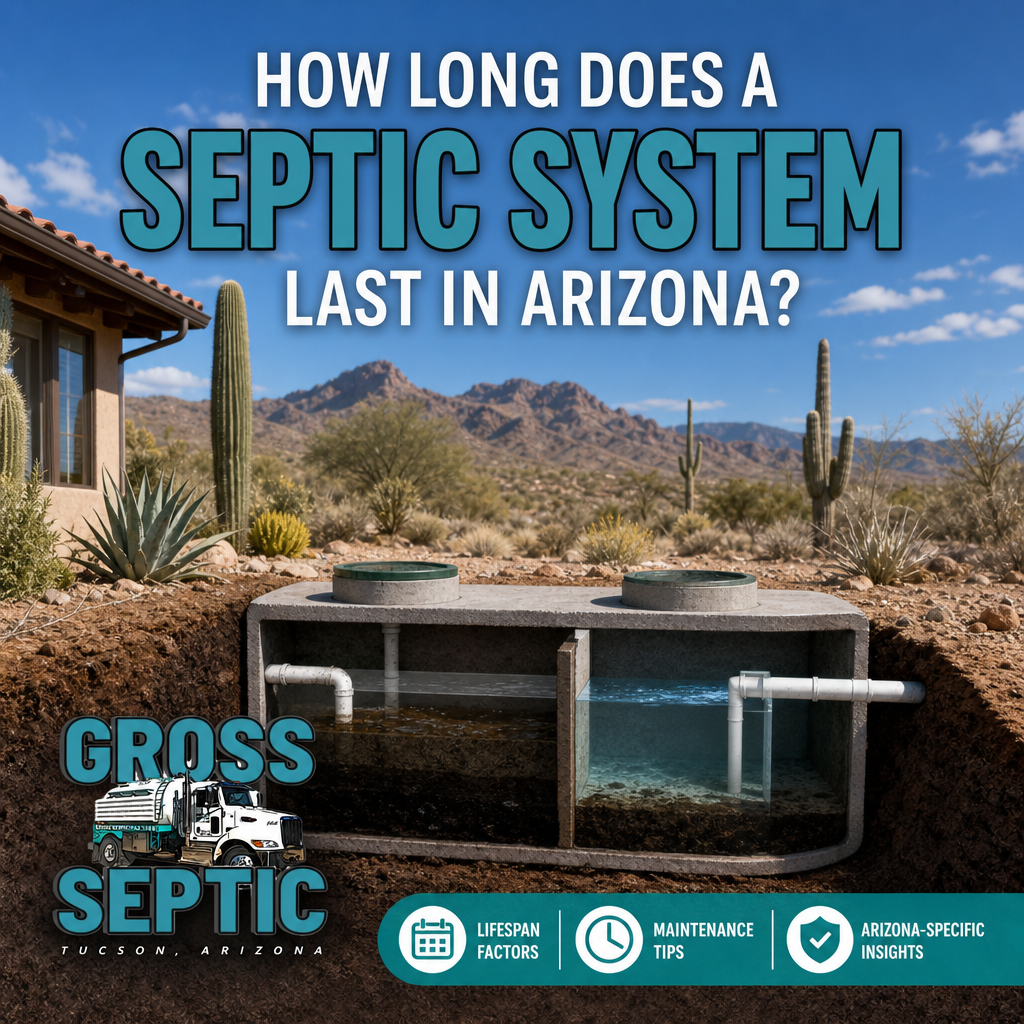
How long does a septic system last in Arizona, and could regular service from Gross Septic Pumping help you avoid backups, drain problems, and expensive system failures?
A septic system in Arizona can often last several decades, but its actual service life depends on soil conditions, household water use, installation quality, tank material, pumping frequency, and how well the leach field is protected. In Southern Arizona, heat, hard soil, seasonal monsoon moisture, and heavy mineral content can all affect system performance. With proper septic system maintenance, routine inspections, and timely repairs, homeowners can get more reliable performance and catch problems before they become major emergencies.
How long septic tanks and leach fields last in Arizona soil conditions
The tank and leach field do different jobs, so they may not wear out at the same rate. A well-installed concrete septic tank may last for many decades when it is pumped and inspected regularly. Plastic and fiberglass tanks can also last a long time, but they need proper installation and soil support to reduce shifting, cracking, or damage from traffic above the tank.
The leach field is often the more sensitive part of the system. In Arizona, soil can contain clay, caliche, sand, and rock layers that affect drainage. If wastewater cannot move through the soil correctly, the system may show signs of slow drains, odors, wet spots, or sewage backing up into the home. Regular septic tank pumping helps keep excess solids from moving into the drain field and shortening its usable life.
Arizona climate factors that affect septic system lifespan
Southern Arizona’s climate creates unique septic challenges. Long dry periods can harden soil, while monsoon storms may temporarily saturate the ground. When the soil around a leach field becomes too wet, wastewater may not disperse as efficiently. If the field is already stressed by solids, grease, or overuse, stormwater can make symptoms appear faster.
Heat can also affect system components. Lids, risers, pipes, and distribution parts may age faster when exposed to extreme temperatures or shifting ground. Gross Septic Pumping has served Tucson and Southern Arizona since 1960, giving the team practical experience with local soil, climate, and septic conditions that can impact long-term system reliability.
Septic pumping frequency for longer system life
Most residential septic tanks need pumping every three to five years, but the right schedule depends on tank size, household size, water usage, and what goes down the drains. A family of five will usually fill a tank with solids faster than a single-person household. Homes with garbage disposals, frequent laundry use, or high water demand may also need more frequent service.
Skipping pumping allows sludge and scum to build up inside the tank. Once solids reach the outlet, they can travel into the leach field and clog the soil. That type of damage can lead to costly septic repairs or even leach field replacement. Thorough pumping done correctly removes accumulated waste, helps restore tank capacity, and gives technicians a chance to spot visible concerns.
Septic inspection signs that your system may be aging
A septic system does not always fail without warning. Many problems start small and become more expensive when ignored. Scheduling a septic inspection can help identify worn components, high sludge levels, leaks, damaged baffles, or drainage issues before they affect the entire property.
Common signs that your septic system may need professional attention include:
- Slow drains in several areas of the home
- Gurgling toilets or drains
- Sewage odors indoors or near the tank
- Wet or unusually green patches over the leach field
- Sewage backing up into tubs, showers, or toilets
- Standing water near the septic area after normal use
- A tank that has not been pumped in several years
- Problems discovered during a real estate transaction
If any of these signs appear, it is best to stop guessing and schedule an evaluation. A clear inspection can help determine whether the issue is related to the tank, pipes, distribution box, or leach field.
Septic tank installation quality and long-term performance
A septic system’s lifespan starts with proper design and installation. Tank size, soil absorption, trench layout, slope, setbacks, and household demand all matter. If a system is undersized or placed in poor soil conditions, it may struggle even with good maintenance. Professional septic tank installation takes local regulations, property layout, and soil behavior into account.
Older properties in rural Arizona may have systems that were installed under outdated standards or without complete documentation. That does not always mean the system is failing, but it does make inspections more important. Gross Septic Pumping provides system evaluations that help property owners understand what they have, how it is performing, and what service may be needed to keep it working properly.
Leach field problems that shorten septic system life
The leach field is responsible for dispersing treated wastewater into the soil. It can be damaged by excess solids, vehicle traffic, tree roots, poor drainage, or heavy water use. Once a leach field becomes clogged, wastewater may surface in the yard or back up into the home.
Homeowners can protect the field by keeping vehicles, sheds, livestock, and deep-rooted trees away from the area. It is also smart to spread out laundry loads, repair leaking fixtures, and avoid flushing wipes, grease, feminine hygiene products, and harsh chemicals. These habits support better leach field services outcomes and reduce strain on the entire septic system.
What Arizona homeowners care about most before septic failure happens
Most property owners want the same things: no sewage backups, no surprise repair bills, no failed sale inspections, and no damage to property value. Preventative maintenance is the most practical way to reduce risk. Regular pumping helps remove solids before they clog the outlet or leach field. Inspections help confirm that lids, baffles, pipes, and drainage areas are functioning as expected.
Real estate transactions make septic condition even more important. Buyers want confidence before closing, and sellers want to avoid last-minute issues that delay a deal. A real estate septic inspection can document system condition, identify needed repairs, and give both sides clearer information. For property managers and businesses, scheduled commercial septic service can also reduce disruptions and protect daily operations.
Choosing the right septic service provider matters. Look for a company that communicates clearly, understands Arizona conditions, performs thorough pumping, and gives honest recommendations instead of pressure-based sales tactics. Gross Septic Pumping is family-owned, locally operated, and experienced in residential and commercial septic systems throughout Tucson and Southern Arizona.
When you need septic system service in Southern Arizona
When you need answers about how long your septic system may last in Arizona, Gross Septic Pumping can help with practical guidance, thorough service, and honest system evaluations. From routine septic tank pumping to inspections, maintenance, repairs, installations, and leach field support, the team helps property owners take care of their systems before small concerns become larger problems.
If your tank has not been pumped recently, you are noticing drain issues, or you are buying or selling a property, scheduling service is a smart next step. Gross Septic Pumping has served Tucson and Southern Arizona for more than six decades with dependable local septic expertise and clear communication you can trust.