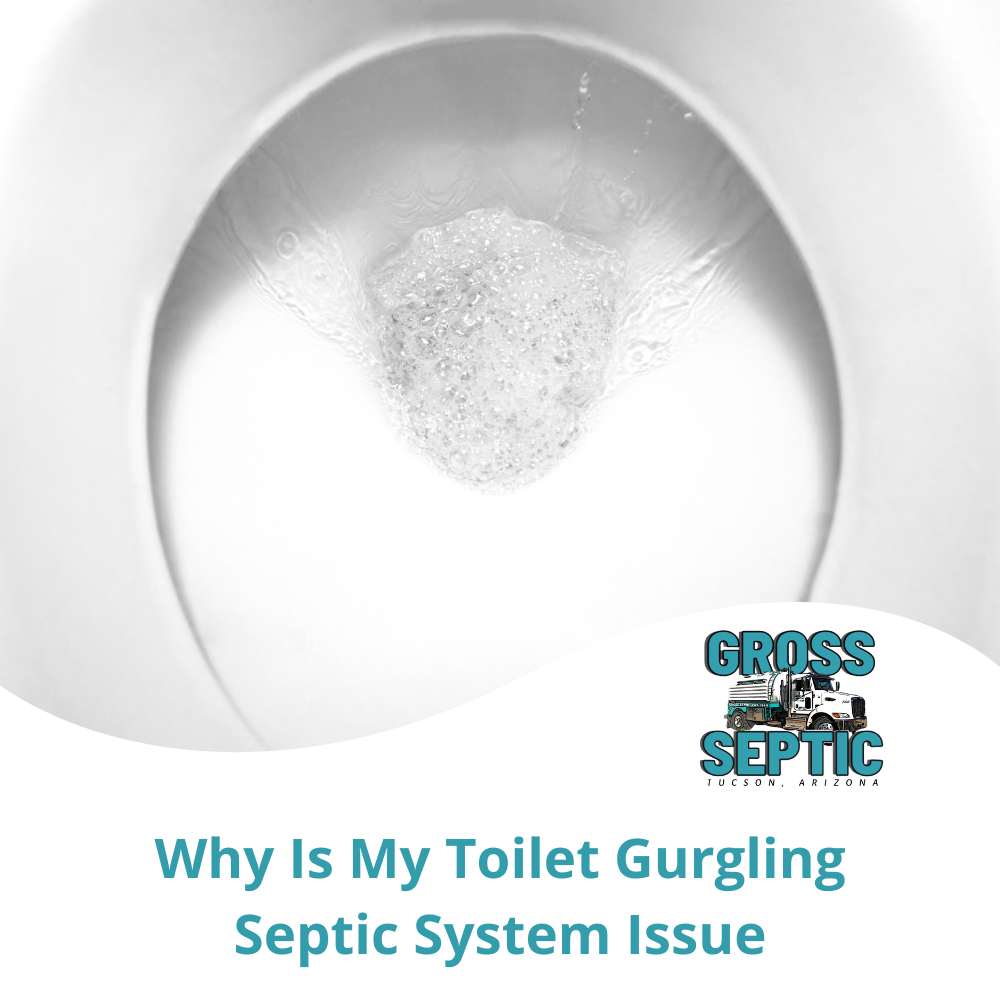
A toilet that suddenly starts bubbling or making strange noises can be more than just an annoying plumbing quirk. In many cases, a toilet gurgling septic system issue is one of the earliest warning signs that something deeper is happening underground.
Most homeowners assume the problem is a clogged toilet or a minor blockage. Sometimes that’s true. But when the gurgling keeps happening—or starts affecting multiple drains—it often points to trouble inside the septic system itself.
The good news is that your septic system usually gives warning signs before a major failure happens. The key is understanding what those signs mean and when it’s time to take action.
What Causes a Toilet to Gurgle?
That bubbling or gurgling sound happens because air is getting trapped somewhere in the plumbing system.
Normally, wastewater flows smoothly through your pipes and into the septic tank. But when flow becomes restricted, pressure builds and trapped air escapes through nearby fixtures—usually the toilet.
That’s why you might hear:
- Bubbling after flushing
- Gurgling when sinks or showers drain
- Water movement inside the toilet bowl without flushing
The sound itself isn’t the main problem. It’s what’s causing the pressure buildup that matters.
A Full Septic Tank Is One of the Most Common Causes
One of the biggest reasons behind a toilet gurgling septic system issue is a septic tank nearing capacity.
As sludge builds inside the tank, wastewater has less room to separate properly. Eventually, flow slows down and pressure begins affecting the plumbing system inside the home.
Toilets often react first because they’re directly connected to the main drainage line.
If your tank hasn’t been serviced in several years, routine septic tank pumping may solve the issue before larger problems develop.
Gurgling Usually Doesn’t Stay Isolated
At first, homeowners may notice only one toilet acting strangely. But septic issues rarely stay contained to a single fixture for long.
As pressure increases, additional symptoms often appear:
- Slow drains throughout the house
- Sewer odors indoors or outside
- Water backing up in tubs or showers
- Wet patches forming near the drainfield
These signs usually mean the problem is moving beyond a simple clog and beginning to affect the septic system itself.
Drainfield Problems Can Trigger Toilet Gurgling Too
Sometimes the tank isn’t the issue at all.
If the drainfield becomes saturated or clogged, wastewater can no longer leave the septic system efficiently. That creates pressure throughout the entire system—including inside your home’s plumbing.
Arizona homeowners deal with this more often than many realize because dense caliche soil drains slowly. During monsoon season 🌧️, the ground can become oversaturated quickly, making septic systems struggle even more.
If your toilet gurgling gets worse after heavy rain, your drainfield may be under stress.
Tree Roots and Pipe Damage Can Also Be the Problem
Underground pipe damage is another common cause homeowners overlook.
Tree roots naturally grow toward moisture, and septic pipes provide an easy target. Over time, roots can partially block lines, restricting wastewater flow and creating air pressure inside the plumbing.
Cracked or collapsed pipes can create similar symptoms.
A professional onsite septic inspection helps identify whether the issue is inside the tank, the drainfield, or the pipes connecting everything together.
Why Ignoring the Sound Gets Expensive
One of the biggest mistakes homeowners make is treating toilet gurgling like a minor inconvenience.
The sound itself may seem harmless—but the issue causing it often gets worse over time.
A partially full tank can become overloaded. A restricted line can eventually block completely. A stressed drainfield can fail permanently if pressure continues building.
Catching these issues early is almost always cheaper than waiting for a full backup or flooded yard.
When Gurgling Becomes an Emergency
There’s a difference between occasional noise and signs of serious failure.
If your toilet gurgling is combined with:
- Sewage smells
- Multiple slow drains
- Water backing up into fixtures
- Standing water outside
…it’s time to call for professional help immediately.
These symptoms usually indicate your septic system is no longer processing wastewater properly.
At that stage, targeted septic troubleshooting and repair may be needed to prevent larger damage.
What Homeowners Can Do Right Away
If you notice persistent toilet gurgling, there are a few smart first steps:
- Reduce water usage temporarily
- Avoid running multiple appliances at once
- Pay attention to other drain behavior
- Check for odors or wet areas outside
Most importantly, don’t assume the issue will disappear on its own.
Septic problems almost never fix themselves—they progress.
Arizona Conditions Make Prevention More Important
Arizona’s climate creates additional stress on septic systems.
Extreme heat can dry and weaken older components. Dense soil slows absorption. Heavy monsoon storms can flood already stressed drainfields.
All of these factors increase the likelihood of pressure-related symptoms like toilet gurgling.
That’s why regular maintenance matters so much in this region.
The Best Way to Avoid Septic Plumbing Issues
The easiest septic problems to solve are the ones caught early.
Routine pumping, inspections, and responsible water usage dramatically reduce the risk of plumbing symptoms turning into full septic failure.
For homeowners unsure about system condition, professional inspections provide clarity before problems become emergencies.
For additional homeowner guidance on septic systems and wastewater management, the Arizona Department of Environmental Quality offers valuable information on system care and regulations.
Get the help you need if you’re dealing with a toilet gurgling septic system issue. Gross Septic helps Arizona homeowners identify the real cause behind plumbing symptoms before they turn into major repairs. From inspections and pumping to full septic repairs, our team provides honest solutions that keep your system working the way it should.