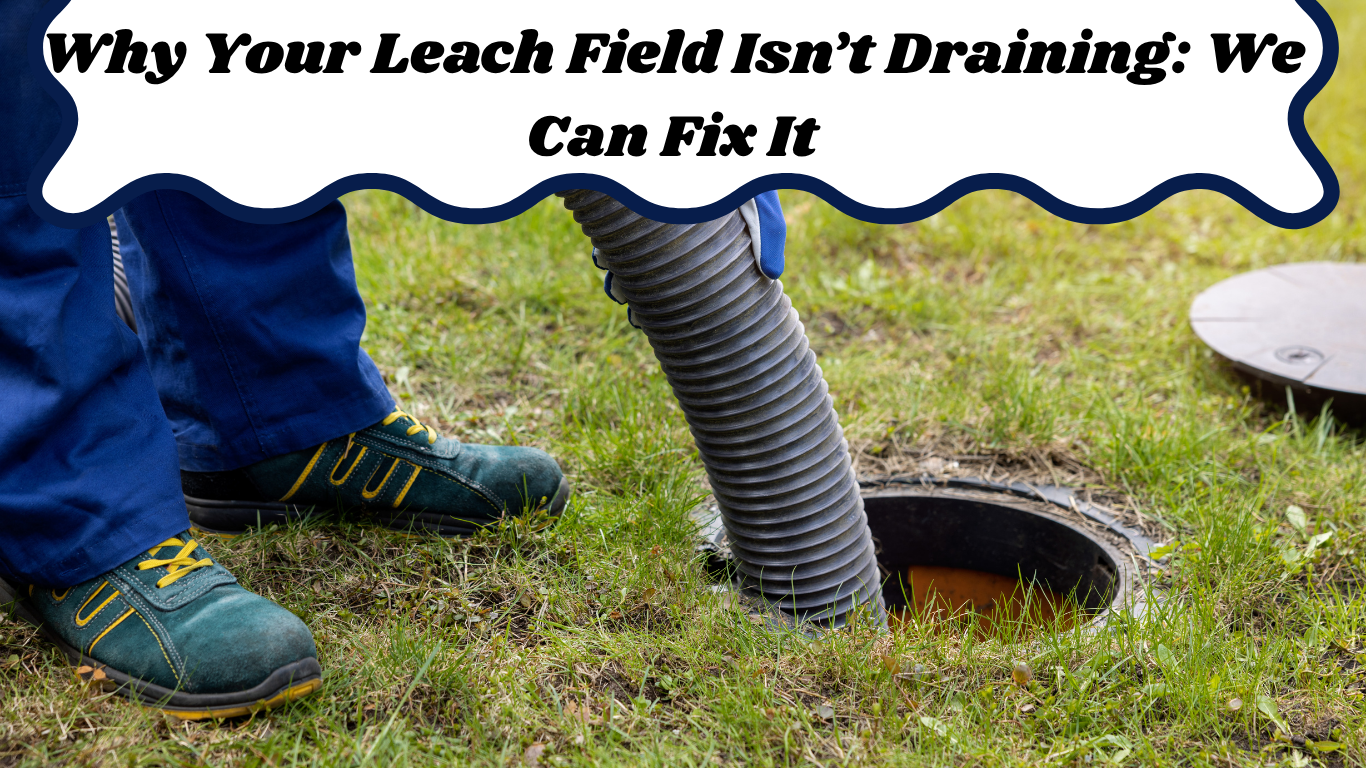
If you’re dealing with soggy spots in your yard, strange smells, or slow drains in the house, you’re probably asking yourself why your leach field isn’t draining. The leach field (also called the drainfield) is responsible for safely dispersing wastewater after it leaves your septic tank. When it fails, the entire system backs up — and it can cause serious property damage, health risks, and repair bills if not addressed.
In Arizona, unique soil types like caliche, seasonal monsoons, and scorching heat all contribute to how well your leach field performs. Here’s how to recognize the signs of trouble and what we do to fix it.
Signs Your Leach Field Is Failing
Leach field issues aren’t always obvious at first. Watch for:
- Pools of water or soggy areas in your yard above or near the drainfield
- A strong sewage odor near the field or septic tank
- Slow drains or toilets that gurgle and flush inconsistently
- Lush green grass growing faster over the leach field than other areas
If you see one or more of these symptoms, it may indicate your leach field is oversaturated, blocked, or failing.
What Causes Improper Drainage?
There are a few major culprits when it comes to leach field failure:
- Biomat buildup: Over time, waste particles form a sludge-like layer in the soil that blocks absorption.
- Soil compaction: Heavy equipment or parking over the drainfield can compress soil and reduce percolation.
- Root invasion: Tree or plant roots can break into and clog field lines.
- Poor design or undersized systems: Older homes may have systems too small for modern usage.
- High water usage: Excessive water entering the system doesn’t allow the field time to absorb.
Arizona’s hard clay and caliche soils also don’t drain as well as sandy soils, meaning systems here are more prone to failure if not maintained properly.
How We Fix It: Solutions That Work in Arizona
When you call Gross Septic to figure out why your leach field isn’t draining, we start with a full system evaluation:
- Visual and equipment inspection: We check for signs of saturation, root intrusion, and field line damage.
- Tank pumping and review: We remove excess waste to see if solids are entering the field.
- Drain line testing: We use jetting or cameras to identify clogs or breaks in the system.
Based on what we find, we can:
- Clear and restore lines with hydro jetting or snaking
- Add diversion systems or additional field lines if capacity is the problem
- Regrade and redirect surface water to avoid field flooding
- Replace damaged components or recommend full leach field replacement if needed
We provide all of this through our expert Septic Repair and Septic Installation services.
What You Can Do to Prevent Drainage Problems
Once your leach field is working again, it pays to keep it that way. Here’s what we recommend:
- Pump your septic tank every 3-5 years to avoid solids entering the field
- Don’t drive or park on the leach field
- Keep trees and shrubs at least 25 feet away from the system
- Avoid overloading the system with laundry, showers, or dishwasher cycles all at once
- Never flush wipes, grease, or chemicals that can clog or kill the field bacteria
Our Septic Pumping services can help keep your system running smoothly year-round.
When Replacement Is the Only Option
Sometimes a leach field is beyond saving. If the soil is clogged beyond repair or the system was poorly designed from the start, full replacement is safer and more cost-effective.
We handle this from permitting to design and install with our Septic Installation team. You’ll get a modern, properly sized system that works for your home and Arizona’s soil and climate conditions.
To understand local regulations, visit the Arizona Department of Environmental Quality for official state guidelines on leach field and septic system compliance.
FAQs About Leach Field Failure
Can a leach field be repaired without digging it up?
In some cases, yes. We can flush or jet the lines and relieve surface drainage. But severe damage often requires excavation.
How long should a leach field last in Arizona?
With proper care, 20 to 30 years is common. Poor maintenance or bad design can cut that in half.
Is it safe to use additives to help the drainfield?
We don’t recommend store-bought additives. Most aren’t effective, and some can even harm the bacteria in your tank.
Can you add more lines to a field that isn’t draining?
Sometimes, yes. If your lot allows it, adding lines or diversion trenches can improve absorption.