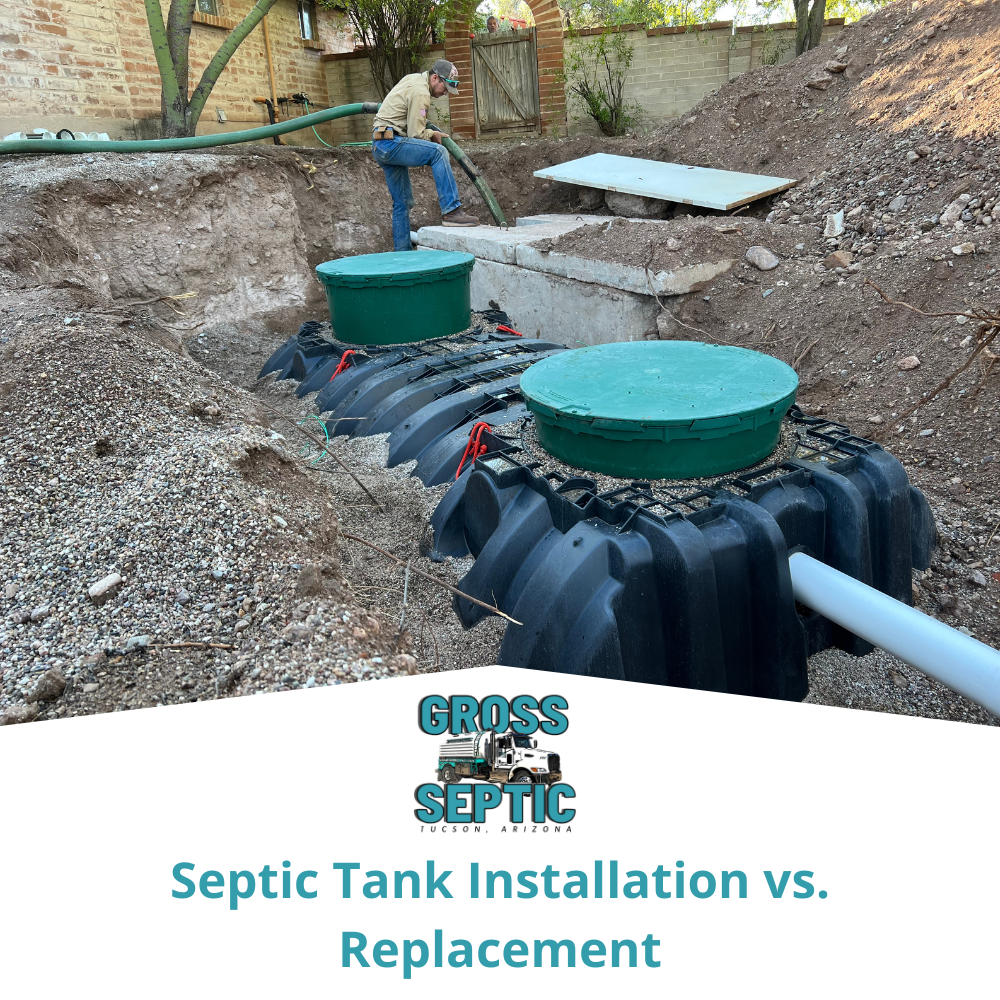
When septic problems arise, one of the biggest questions homeowners face is whether they need a new septic tank installation or a septic tank replacement. While the two may sound similar, they serve very different situations—and choosing the wrong option can lead to unnecessary costs or repeat system failures.
At Gross Septic Pumping, we help homeowners throughout Tucson and surrounding areas make informed decisions based on the condition of their system, their property, and long-term performance needs. Here’s how to tell whether installation or replacement is the right choice for your home.
What Septic Tank Installation Means
Septic tank installation typically applies to new construction or properties that have never had a septic system. This includes:
- New homes not connected to municipal sewer
- Rural or undeveloped land
- Property conversions where sewer access isn’t available
- Replacing outdated cesspools or non-compliant systems
A full installation involves more than placing a tank in the ground. It includes site evaluation, soil testing, system design, permitting, tank placement, plumbing connections, and leach field installation.
In Arizona, proper installation is especially important due to soil conditions, drainage challenges, and local regulations. A correctly installed system sets the foundation for decades of reliable performance.
What Septic Tank Replacement Involves
Septic tank replacement applies when an existing system is no longer functional or safe. In these cases, the tank itself must be removed and replaced, but parts of the system—such as the leach field—may still be usable if they’re in good condition.
Common reasons for septic tank replacement include:
- Cracked or collapsing tanks
- Severe corrosion or deterioration
- Repeated backups even after pumping
- Tanks that are undersized for the home
- Systems that no longer meet code
- Structural damage from soil shifting or roots
Replacement focuses on correcting failures while preserving what still works, when possible.
Key Signs You May Need a Septic Tank Replacement
Many homeowners try to keep an aging system running longer than they should. Here are signs replacement is often the smarter option:
- Your tank is more than 30 years old
- Frequent backups or overflows
- Visible cracks or broken lids
- Leaking wastewater into the yard
- Repairs no longer solve the problem
- The system was improperly installed originally
If the tank structure itself has failed, pumping or minor repairs will only provide temporary relief.
When Installation Is the Better Choice
Full septic system installation is usually recommended when:
- There is no existing septic system
- The old system is completely non-compliant
- The property layout has changed significantly
- The leach field has failed beyond repair
- The system must be redesigned due to soil limitations
In these cases, starting fresh ensures the system is sized correctly and designed to work with Arizona’s soil and climate conditions.
How Soil and Property Conditions Affect the Decision
In Southern Arizona, soil plays a major role in whether replacement or installation is appropriate. Clay-heavy soil, caliche layers, rocky terrain, and poor drainage all affect septic performance.
A professional evaluation looks at:
- Soil absorption rates
- Slope and elevation
- Available space for leach fields
- Distance from structures and property lines
- Long-term drainage potential
At Gross Septic Pumping, we never guess. We evaluate your property thoroughly before recommending replacement or full installation.
Cost Differences Between Installation and Replacement
While every property is different, septic tank replacement is often less expensive than full installation—provided the leach field and plumbing connections are still viable.
Installation costs tend to be higher because they include:
- Soil testing and design
- New leach field construction
- Full permitting and inspections
- Extensive excavation
Replacement may involve:
- Removing the old tank
- Installing a new tank
- Reconnecting existing lines
- Limited excavation
The key is choosing the option that prevents future failures—not just the cheapest short-term fix.
Why Proper Installation or Replacement Matters
Improper septic work leads to:
- Repeat backups
- Leach field saturation
- Groundwater contamination
- Costly emergency repairs
- Premature system failure
Whether installing or replacing a septic tank, the work must be done to code, correctly sized, and suited to the property. Cutting corners almost always results in higher costs later.
How Gross Septic Pumping Helps Homeowners Decide
We understand that septic work is a major investment. That’s why we focus on clear communication and honest recommendations.
Our process includes:
- Full system inspection
- Soil and site evaluation
- Clear explanation of options
- No pressure or upselling
- Professional installation or replacement
- Compliance with ADEQ and local health departments
We work with homeowners, builders, and real estate professionals to ensure every system performs as it should.
Making the Right Choice for Your Property
If your septic system is failing, choosing between installation and replacement doesn’t have to be confusing. With the right evaluation, you can make a decision that protects your home, your property, and your budget.
When you need expert guidance for septic tank installation or replacement in Tucson and surrounding areas, Gross Septic Pumping is here to help. We’ll assess your system, explain your options, and deliver dependable service built for Arizona conditions.
Call today to schedule an evaluation and get the answers you need—before small problems become major ones.