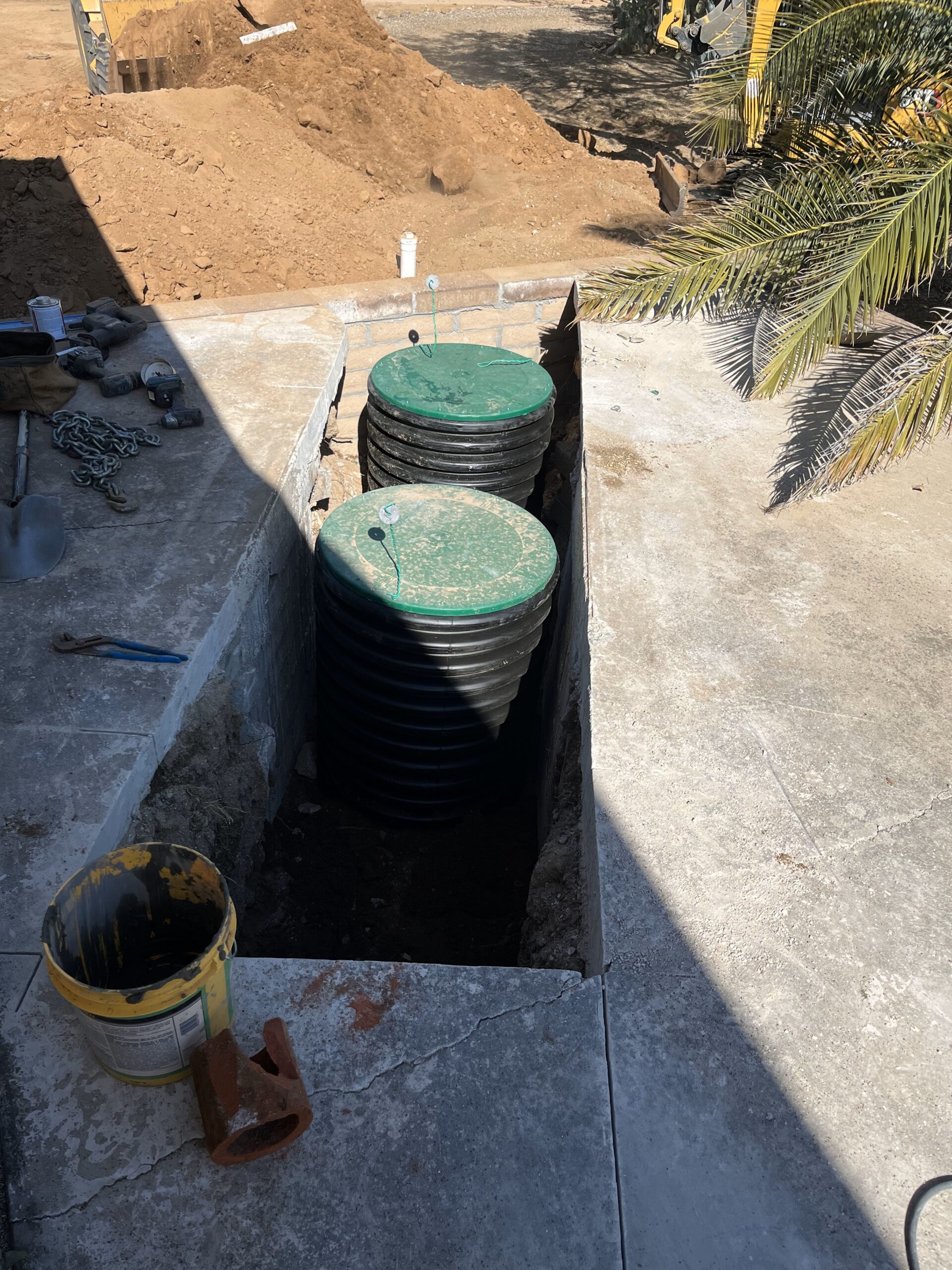
We offer complete septic system installation services in Tucson and surrounding areas, and one of the biggest questions homeowners ask is how to get their property ready before the work begins. Preparing properly not only speeds up the installation—it also helps ensure your system performs correctly for decades to come.
Whether you’re building a new home, replacing an old system, or installing a septic system for rural property, here’s everything you need to know.
Schedule a Site Evaluation and Soil Test
Before anything else, your property needs a professional site evaluation and soil test (often called a perc test). This determines how well the soil absorbs water, which is critical for designing your leach field. Arizona soil varies widely—from sandy washes to dense caliche—and the right system must match the ground conditions.
A soil test will help determine:
- Whether the planned location is suitable
- How large the leach field should be
- What type of system your property needs
- How deep trenches can go safely
Scheduling this early prevents delays and ensures the installation is engineered correctly from the start.
Clear the Installation Area
The crew needs unobstructed access to the tank location and the leach field. If the area is covered with brush, debris, or old structures, clearing it ahead of time makes the installation smoother.
Remove:
- Brush, shrubs, or small trees
- Old fencing
- Rocks or debris
- Abandoned concrete pads or structures
Avoid removing large trees unless the installation team recommends it. Sometimes mature roots can interfere with lines, but unnecessary clearing can also damage your property.
Mark Utilities and Property Boundaries
Before excavation begins, it’s essential to mark all underground utilities. This includes:
- Water lines
- Gas lines
- Electrical conduits
- Cable or communication lines
Arizona 811 should be contacted before any digging happens. Property boundaries should also be clearly marked, especially in rural areas where lot lines may not be visually obvious. Proper marking helps prevent accidental damage and ensures the system is installed exactly where it belongs.
Ensure Truck and Equipment Access
Septic installation requires heavy equipment, such as backhoes, tank trucks, and trenchers. Make sure the crew can reach the work area without difficulty.
Check for:
- Narrow driveways
- Low-hanging branches
- Soft or uneven ground
- Locked gates or fences
- Tight turns around buildings
If access is limited, the installation team can often plan around it—but knowing in advance prevents delays.
Plan for Water Usage During Installation
During installation, your water usage may need to be limited or temporarily redirected. If you are replacing a failing system, heavy water use can make an already stressed leach field or tank overflow. Planning ahead helps avoid backups or additional damage.
Before work begins:
- Avoid laundry days
- Shorten showers
- Limit dishwashing
- Notify household members
This ensures the installation crew can work safely and your plumbing system doesn’t become overloaded.
Avoid Heavy Equipment and Vehicles Near the Installation Area
The soil in and around the leach field must remain uncompacted for proper drainage. Driving on the area where the septic system will be installed can affect soil absorption and lead to long-term performance problems.
Make sure to keep:
- Cars
- Trailers
- ATVs
- Construction vehicles
away from the designated installation zones before and during the project.
Prepare for Permitting and Local Compliance
In Arizona, septic installations must meet ADEQ and county health department regulations. Your installation company should handle the permits, but it helps to know what to expect.
Typical requirements include:
- Site evaluation documents
- Soil test results
- System design plans
- Property information and maps
- Inspection scheduling
Working with an experienced company ensures everything is filed correctly and approved without delays.
Know What to Expect During Installation
Being prepared helps the process run smoothly. A typical installation may include:
- Excavation for the tank
- Trenching for leach lines
- Tank placement
- Pipe installation and connectivity
- Backfilling and grading
- Final inspection
Most projects take one to three days depending on complexity.
Plan for Long-Term Protection After Installation
Once your system is installed, protecting it begins immediately.
Avoid:
- Planting trees near the leach field
- Driving over the tank or trenches
- Building patios, sheds, or driveways on top of the system
These restrictions ensure your system drains properly and avoids future damage.
Call Gross Septic Pumping for Professional Septic System Installation
Preparing your property the right way makes a huge difference in how well your septic system performs—and how long it lasts. At Gross Septic Pumping, we install septic systems built specifically for Arizona soil and desert conditions.
If you’re planning a new build, replacing an old system, or preparing rural property, we’re here to guide you every step of the way.
Call Gross Septic Pumping today for expert septic installation services in Tucson and surrounding areas.