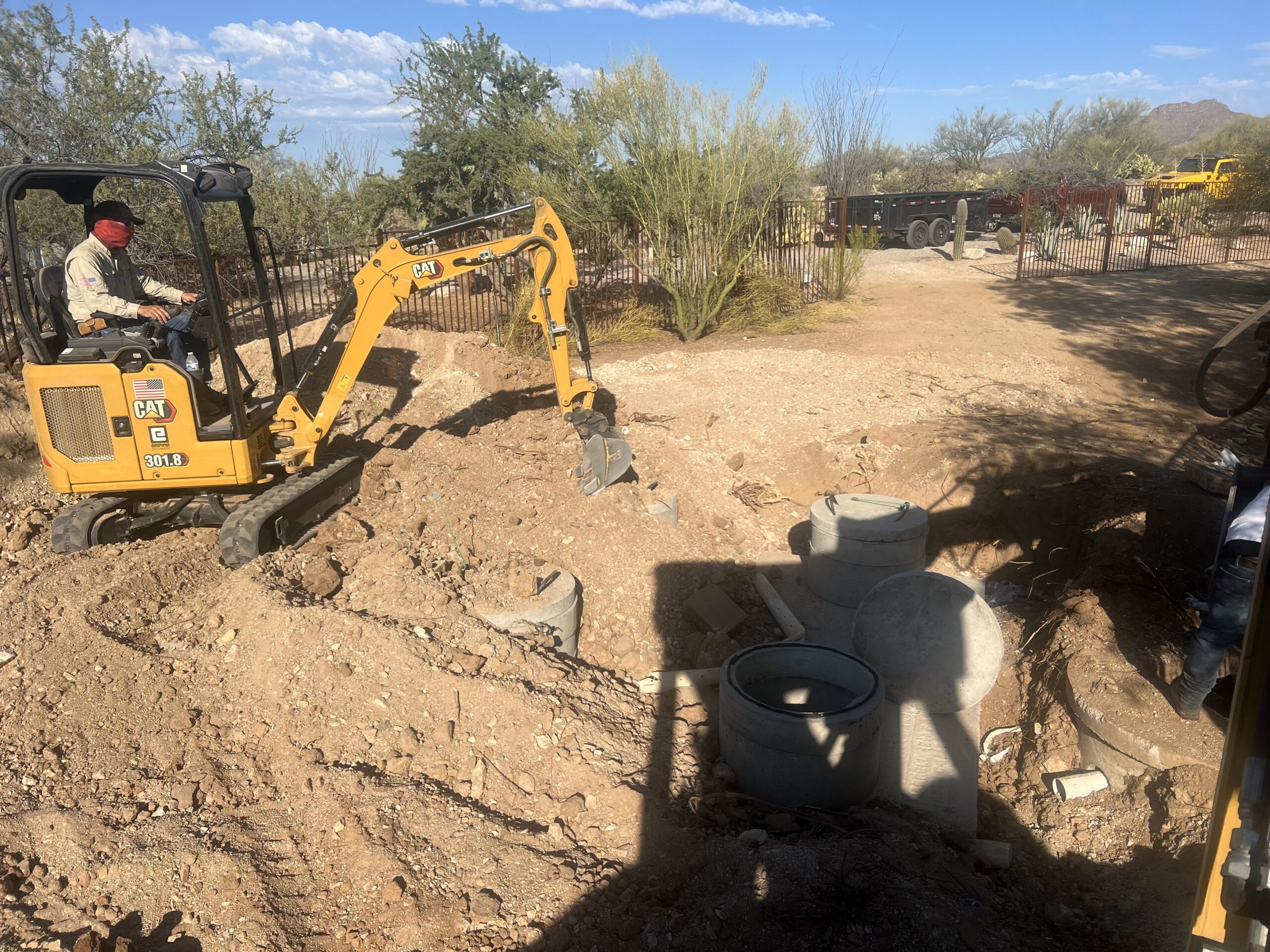
If you’ve walked into your bathroom and found sewage backing up in the tub—or worse, overflowing from a toilet—then you’re likely dealing with a septic system emergency. As a septic plumber with years of hands-on experience in Tucson and surrounding areas, I can tell you: when sewage backs up, time matters.
Emergency septic backups can quickly lead to property damage, health hazards, and overwhelming repair costs if you don’t act fast. The good news? In most cases, there are clear warning signs and practical steps you can take before the situation gets worse. Whether it’s happening now or you’re trying to prevent the next one, here’s everything you need to know.
What Is a Septic Backup?
A septic backup happens when wastewater can’t leave your home and starts flowing back into sinks, toilets, showers, or floor drains. Instead of moving through the septic tank and out to the leach field, the water hits a blockage—or the tank is too full—and it comes back inside.
The cause can be anything from a full tank, a clogged pipe, a failed pump, or even a saturated leach field. But no matter the reason, once wastewater is re-entering your home, you’ve got a real problem.
Common Signs of an Emergency Septic Backup
Most backups don’t come out of nowhere. Here are the red flags I tell every customer to watch for:
- Slow-draining sinks or tubs, especially if it happens throughout the house
- Gurgling sounds in the pipes when you flush or use the sink
- Foul odors coming from drains, toilets, or around the tank outside
- Water backing up into lower-level fixtures, like basement or shower drains
- Soggy patches or standing water near the septic tank or leach field
If you notice more than one of these signs at the same time, call immediately. The system is likely under serious pressure and failure may already be underway.
What Causes a Septic Backup?
From what I’ve seen in hundreds of Arizona homes, here are the most common causes of emergency septic backups:
1. Overdue Tank Pumping
Your septic tank should be pumped every 3 to 5 years. If it’s full, solids can block the outlet or overflow into the drain field, forcing wastewater back into your home.
2. Clogged Inlet or Outlet Pipes
Grease, wipes, debris, or foreign objects can cause blockages in the plumbing leading into or out of your septic tank.
3. Leach Field Saturation
When the soil around the drain field is too wet—usually after storms or heavy water use—it can’t absorb wastewater. That water has nowhere to go and flows back into the system.
4. Septic Pump Failure
If your system includes a pump (common if your tank is downhill from your home), and that pump burns out or the float switch fails, wastewater will build up and backflow.
5. Root Intrusion
Tree roots breaking into septic lines or tanks can restrict flow or collapse the pipe completely, causing backups and pooling sewage.
What To Do During a Septic Backup Emergency
If you’re facing an active backup, here’s what I recommend doing right away:
1. Stop Using Water
Turn off all faucets, dishwashers, washing machines, and toilets. Any water sent down the drain will add to the pressure in the system.
2. Avoid Chemical Cleaners
Don’t pour drain cleaners or chemicals down the drain. These won’t help and can actually damage your system or make conditions worse for repairs.
3. Keep People and Pets Away
Backed-up sewage contains harmful bacteria and pathogens. Keep children and animals out of any affected areas and ventilate where possible.
4. Call a Professional Septic Service Immediately
This isn’t the time for guesswork or DIY fixes. A qualified septic technician can identify the cause quickly, pump the tank if needed, and get your system under control.
At Gross Septic Pumping, we respond to emergency calls 7 days a week throughout Tucson, Vail, Marana, and Sahuarita.
How We Handle Emergency Septic Backups
When we get to your property, we don’t just pump and run. We:
- Locate and access the tank quickly
- Inspect sludge levels and pump if needed
- Check for blockages in the tank or lines
- Inspect pumps, floats, and electrical connections
- Examine the leach field area for signs of failure
- Provide a full diagnosis and honest next steps
Sometimes it’s a quick fix. Sometimes it’s a sign of a much bigger problem. Either way, we’ll walk you through it clearly, without upselling or pressure.
Preventing the Next Emergency
Once the immediate crisis is over, we’ll help you prevent another one. Here’s what we typically recommend:
- Pump the tank every 3 to 5 years
- Don’t flush wipes, grease, or chemicals
- Space out water use to avoid overwhelming the system
- Install risers for easy tank access
- Inspect your system annually to catch small issues early
Call Gross Septic Pumping—Day or Night
Septic backups never happen at a convenient time. When they hit, you need a team that knows how to act fast, fix the real issue, and treat your home with respect.
If you’re dealing with an emergency septic backup in Tucson, don’t wait. Call Gross Septic Pumping now. We’ll be there with answers, tools, and real help when you need it most.