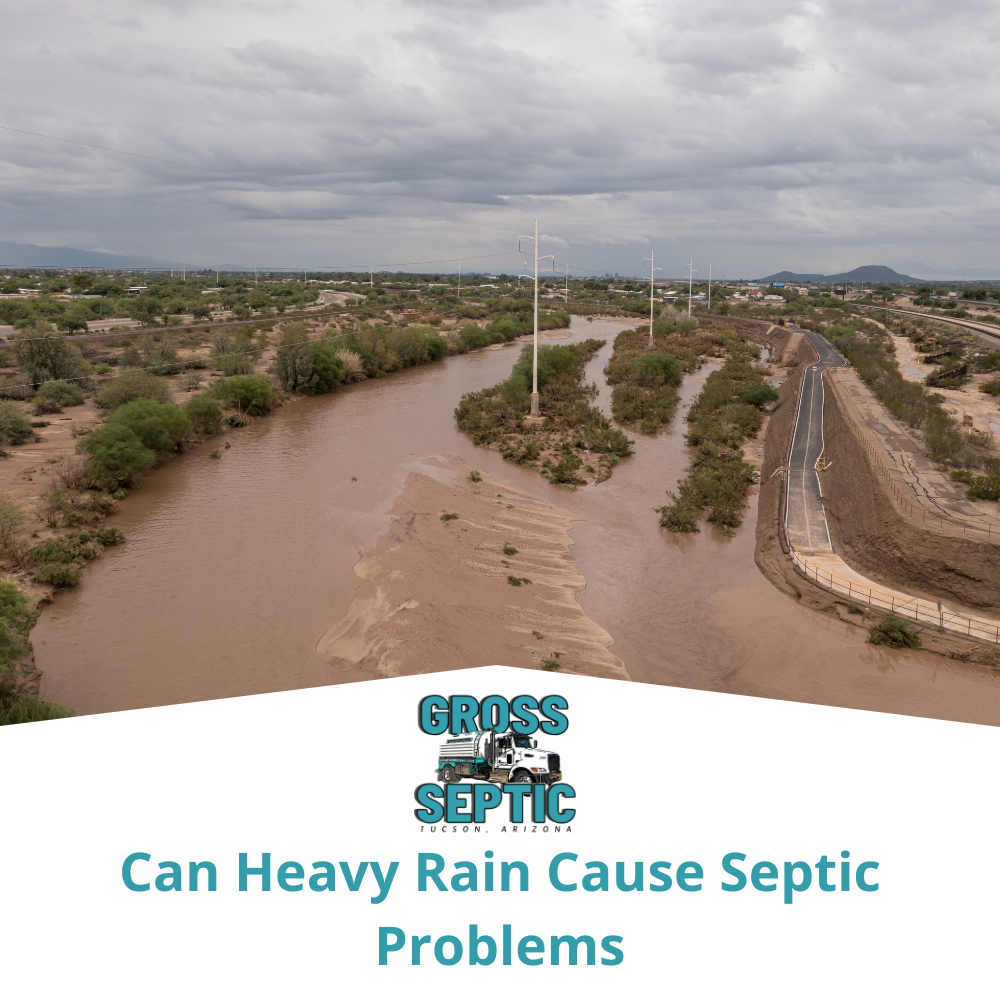
If you’ve ever wondered can heavy rain cause septic problems, the answer is yes—and it’s more common than most homeowners realize. Heavy rainfall can overwhelm your septic system, especially in areas like Arizona where sudden monsoon storms can saturate the ground quickly. When your system can’t properly drain, it can lead to backups, odors, and even long-term damage.
Understanding how rain impacts your septic system can help you prevent issues and take the right steps before, during, and after a storm.
How Heavy Rain Affects Your Septic System
Your septic system relies on soil to absorb and filter wastewater through the drainfield. When heavy rain hits, that soil can become oversaturated, leaving nowhere for wastewater to go.
This creates several problems. First, water fills the spaces in the soil that normally allow wastewater to filter through. Second, the system becomes overloaded with excess groundwater. As a result, your septic system struggles to process waste effectively.
In extreme cases, wastewater may even back up into your home or rise to the surface in your yard.
Common Signs of Septic Problems After Rain
After a heavy storm, it’s important to watch for warning signs that your system is struggling. If you notice any of the following, heavy rain may be causing septic problems on your property:
- Slow drains throughout your home
- Toilets that flush sluggishly or gurgle
- Sewage odors inside or outside
- Soggy patches or standing water near the drainfield
- Wastewater backing up into sinks or tubs
These symptoms often appear shortly after rainfall because the system can’t keep up with the added moisture.
Why Arizona Homes Are Especially at Risk
Arizona homeowners face unique challenges when it comes to septic systems and rainfall. While the region is known for dry conditions, monsoon storms can bring sudden, heavy downpours that overwhelm the ground quickly.
Caliche soil, which is common in Arizona, does not absorb water easily. When it becomes saturated, it can stay that way for longer periods, increasing the risk of septic issues.
Additionally, systems that are already near capacity or not properly maintained are more likely to experience problems during storms.
What to Do If Heavy Rain Causes Septic Issues
If you suspect that heavy rain has affected your system, taking quick action can prevent further damage.
Start by reducing water usage inside your home. Avoid running laundry, taking long showers, or using large amounts of water until the ground has had time to dry out.
Next, monitor your yard and plumbing for ongoing issues. If problems persist, it’s time to call in professionals.
Our Septic Inspections can identify whether your system is simply saturated or if there is a deeper issue that needs repair.
When Pumping or Repairs Are Needed
Sometimes, rain-related problems reveal underlying issues with your septic system. If your tank is already full, heavy rain can push it past its limit.
In these cases, scheduling Septic Pumping can relieve pressure on the system and restore proper function.
If damage has occurred—such as clogged lines, broken pipes, or drainfield failure—our Septic Repair services can resolve the problem before it worsens.
The key is not to wait. Delaying service can lead to more extensive damage and higher repair costs.
How to Prevent Septic Problems During Heavy Rain
While you can’t control the weather, you can take steps to protect your septic system during storms.
- Direct rainwater away from your drainfield with proper grading and drainage
- Keep gutters and downspouts clear and pointed away from the septic area
- Avoid driving or placing heavy objects on the drainfield
- Schedule regular pumping to prevent the tank from reaching capacity
- Limit water usage during and after heavy rain
These preventative measures help reduce stress on your system and lower the risk of failure.
Long-Term Impact of Repeated Saturation
If your septic system is repeatedly exposed to heavy rainfall without proper maintenance, long-term damage can occur. Saturated soil can lead to drainfield clogging, reduced absorption, and eventual system failure.
Over time, this may require costly repairs or even full system replacement. That’s why it’s important to address problems early and maintain your system regularly.
FAQs About Rain and Septic Systems
Can one storm cause serious damage?
Yes, especially if your system is already near capacity or has underlying issues.
Should I pump my tank before monsoon season?
It’s a smart preventative step, especially if you’re close to your scheduled pumping time.
How long does it take for a drainfield to dry out?
It depends on soil type and weather conditions, but it can take several days to weeks.
Is it safe to use water during heavy rain?
You can, but it’s best to limit usage to avoid overloading the system.
For more information on septic system care and environmental guidelines, visit the Arizona Department of Environmental Quality.
If you’re looking for reliable help with issues related to can heavy rain cause septic problems, Gross Septic is here to help. We understand Arizona’s soil conditions, weather patterns, and septic system challenges. Whether you need an inspection, pumping, or repairs, our team will provide fast, honest solutions to keep your system working properly—rain or shine.